“DXP vs CMS” A tough call for businesses. Established platforms like WordPress and Drupal have replaced manual coding to regularly update content on the website over the past couple of years. Today, users feel more comfortable when they relate or connect with your website, which is why some of the businesses are choosing DXP platforms that personalize the experience for users. However, this does not mean that each business should go for the DXP platform. Because there are pros and cons involved with both platforms, which is why planning, analyzing, and selecting the platform that aligns with your business goals is extremely important.
Let’s discuss the “DXP vs CMS” in detail and understand which platform will be most suitable for your business goals…
What is DXP (Digital Experience Platform )?
An integrated software architecture that creates, manages, delivers and optimizes personalized experiences for different devices, user segmentation, and other emerging touchpoints is called DXP (Digital Experience Platform). DXP is a product category and comes with monolithic suites as well.
For instance, you have been ordering food from your favourite food delivery app built on DXP for the past couple of days. The app knows your location, timing and the kind of food you are ordering is vegetarian. So, the next time you open the app, it will hide meat dishes, demonstrate the weather outside(e.g. raining), suggest warm dishes, and offer discounts on your favourite meal.
Examples of DXP: Adobe Experience Manager, Sitecore, Liferay

Composable DXP
Composable DXP is a modular integration approach that breaks complex systems into smaller, independent and standardized modules to select and rearrange different components. For example, imagine a normal DXP as a one big robot and if one arm of the robot breaks down, the whole system stops working. A composable DXP is a snap of parts integrated together to build a robot, where the arm can be changed with a newer one.
Pros
Here are the benefits of a composable DXP
- Flexibility
- Fast Innovation
- Scales better
- Future-proof
- Better for modern teams
Cons
Here are the drawbacks of a composable DXP
- More complex
- Requires technical skills
- Slower to start
- Cost Surprises
What is CMS (Content Management Systems)?
A software that enables you to create, manage, edit, and publish the content on your website without manual coding requirements is called a CMS (content management system). It can also manage multiple sites, multilingual content and multiple channels.
For example, an online store allows a product page creation, addition of an image to the product page, writing, editing and publishing the product content without any coding knowledge.
Examples of CMS: WordPress, Drupal, Contentful, Sanity

Monolithic CMS
A CMS where content creation, page rendering and delivery are managed by a single application or in short, “frontend and backend are deeply interconnected” can be known as a monolithic CMS. For example, a restaurant has an open space where they cook food and serve their customers with kitchen operations and attentive table-side service, so when something happens in the kitchen, the whole business stops. Here, think of the kitchen as the backend and attentive table-side service as the frontend.
Pros
Here are the benefits of Monolithic CMS
- Easy to get started
- Lower technical barrier
- Predictable cost
- Proven and Stable
Cons
Here are the drawbacks of Monolithic CMS
- Limited flexibility
- Harder to scale and evolve
- Slower innovation
- Upgrade pain
DXP VS CMS
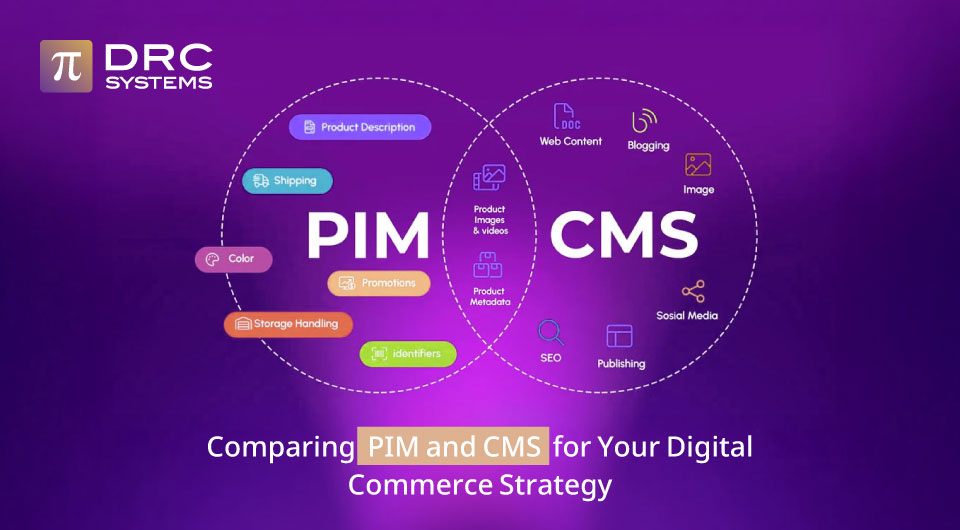
DXP and CMS are two sides of the same coin. Originally developed for web 1.0, CMS is a popular platform for creating, managing, publishing and updating the content on a single website. Whereas, DXP was introduced to help large enterprises meet modern customer expectations via personalization and omnichannel experience across digital touchpoints.
Read More: Digital Experience Platforms (DXPs): What You Need to Know
- According to Dimension Market Research Report, DXP market size will escalate from USD 15.6 billion in 2025 to USD 41.9 billion in 2034 with a CAGR of 11.6%. and
- According to the Grand View Research report, the CMS market size will soar from USD 34.94 billion in 2025 to USD 77.77 billion in 2033 with a CAGR of 10.6%.

| Business Goals | Recommended |
|---|---|
| Need Omnichannel Personalization | DXP |
| Focused mostly on HTML site content | CMS |
| Heavy integrations with business systems | DXP |
| Large amount of dynamic content like blog, Ecommerce store | CMS |
As of 2025, businesses have turned towards composable DXP platforms following modern technology principles – Microservices, API-first, Cloud-native, and Headless (MACH). With evolving technology and trends, traditional static CMSs seem to be falling short on addressing user demands and building connections in real-time. The challenges of limited support for marketers due to IT bottlenecks of traditional systems, static vs personalized content delivery and data silos undermine CMS websites. However, Marketers can use low-code/no-code tools with the DXP platform.
DXP brings an integrated set of technologies with CMS capabilities to achieve desired results for your business. However, businesses that migrate to DXP face hidden cost surprises like migration friction cost, governance overhead, and training investment multiplier. So it is recommended to assess the budget and future plans before implementing DXP.
A Content Management System is ideal for businesses looking for basic content needs, a limited budget, and single-site operations.
Digital Experience Platform is ideal for businesses looking for data-driven insights, high-level personalization, and online presence across several digital channels.
Composable DXP vs Monolithic CMS
| Dimension | Composable DXP | Monolithic CMS |
|---|---|---|
| Architecture | Modular & Best-of-Breed | All-in-One System |
| Flexibility | Highly Customizable | Limited Customization |
| Scalability | Scale Components Independently | Scaling Impacts Entire System |
| Omnichannel | Built for Multi-Channel | Web-Centric Focus |
| Best for | Agility & Innovation & Complex Ecosystem | Speed & Simplicity, Small Teams |
Step-by-Step Checklist:
Map Your Content Channels
Align different types of content according to user personas throughout the buyer’s journey. Monitor and analyze which content channel which type of audience segment is bringing the most traffic to your website.
Prioritize Personalization needs
Monitor and find out whether your business requires personalization or not. Analyze KPIs, evaluate customer behaviours and expectations, host surveys and poll to find out if your business is ready for personalization.
Score Existing tech debt
Measure existing technical debt via automated code analysis with team experience to ensure what your website requires at the moment. With manageable tech debt, modern CMS is the best option, while high tech debt that requires total replatforming needs a composable DXP.
Assess budget vs future needs
Determine the budget your business has for new software architecture and future requirements of the business to achieve desired outcomes. CMS would be the best option if you want to scale your business from a website, or choose DXP if you want to provide a data-driven, personalized omnichannel experience across various digital platforms.
FAQs:
Que: What is the core difference between DXP and CMS?
Ans: DXP is a software architecture that offers an omnichannel experience via personalization and integration to the entire user journey across various digital platforms. CMS is a tool for managing and publishing content on a single website. CMS can also manage multiple sites, multilingual content and multiple channels.
Que: Which one is better for my business, DXP or CMS?
Ans: CMS is suited for startups and small businesses and DXP is the prime choice for large enterprises.
Que: When should I upgrade from CMS to a DXP?
Ans: When your organization requires advanced data integration, intends to expand brand exposure, and “single view of the customer” matters. You should upgrade from CMS to DXP.
Que: What are the risks of choosing DXP?
Ans: The risks associated with DXP are higher cost, require technical expertise, and are complex to implement.
Map Your Content Channels
Align different types of content according to user personas throughout the buyer’s journey. Monitor and analyze which content channel which type of audience segment is bringing the most traffic to your website.
Prioritize Personalization needs
Monitor and find out whether your business requires personalization or not. Analyze KPIs, evaluate customer behaviours and expectations, host surveys and poll to find out if your business is ready for personalization.
Score Existing tech debt
Measure existing technical debt via automated code analysis with team experience to ensure what your website requires at the moment. With manageable tech debt, modern CMS is the best option, while high tech debt that requires total replatforming needs a composable DXP.
Assess budget vs future needs
Determine the budget your business has for new software architecture and future requirements of the business to achieve desired outcomes. CMS would be the best option if you want to scale your business from a website, or choose DXP if you want to provide a data-driven, personalized omnichannel experience across various digital platforms.
FAQs:
Que: What is the core difference between DXP and CMS?
Ans: DXP is a software architecture that offers an omnichannel experience via personalization and integration to the entire user journey across various digital platforms. CMS is a tool for managing and publishing content on a single website. CMS can also manage multiple sites, multilingual content and multiple channels.
Que: Which one is better for my business, DXP or CMS?
Ans: CMS is suited for startups and small businesses and DXP is the prime choice for large enterprises.
Que: When should I upgrade from CMS to a DXP?
Ans: When your organization requires advanced data integration, intends to expand brand exposure, and “single view of the customer” matters. You should upgrade from CMS to DXP.
Que: What are the risks of choosing DXP?
Ans: The risks associated with DXP are higher cost, require technical expertise, and are complex to implement.