
SaaS UX Design has transformed product design and become a determining pillar of SaaS product growth. In the early era of the internet, desktop software took the world by storm, helping businesses with operational assistance. As we move further, all these desktop software started moving towards becoming a web-based platform. Today, we see all these digital web-based products are proactively creating a mobile-first design to help users across the globe with output quality. The upcoming days of SaaS UX design will provide conversational AI-driven automation over traditional navigation to attract a large number of users.
Here in this blog, let’s discuss SaaS UX best practices, SaaS UX Design trends, common SaaS UX mistakes, and the future of UX design for SaaS platforms.
What Makes SaaS UX Design Unique?
SaaS Design with a clean and uncluttered dashboard that directly accommodates user needs, offering a seamless experience, boosting engagement, retention rate and empowering functionalities. To make your digital product design unique, follow SaaS design principles 1) user-centred & intuitive 2) consistency 3) simplicity & clarity 4) progressive disclosure 5) feedback & guidance 6) Accessibility
Let’s check out the difference between SaaS UX and Traditional product UX.
| Aspect | SaaS UX | Traditional Product UX |
|---|---|---|
| Usage Pattern | Continuous long-term usage with recurring interactions | One-time or Occasional use |
| User Relationship | Ongoing relationship | Transactional relationship |
| Update Frequency | Frequent updates and iterations | Infrequent version-based updates |
| User Goals | Task efficiency, productivity and retention | Task completion or product usage |
Digital product design is evolving faster than ever due to volatile markets, tech revolution, and user behaviour. This is why focusing on building scalable user interfaces can help businesses sustain over a longer period of time without taking a heavy cost hit.
SaaS UX Best Practices to Follow in 2026
Seamless SaaS Onboarding UX
Develop a digital product or web application with a straightforward sign-up and login process to onboard users without any exhausting process of form fill up, profile creation, and verification. Utilizing social logins to help users with one-click login helps with direct access to the dashboard and eliminates the lengthy signup/login process without compromising on data integrity and security.
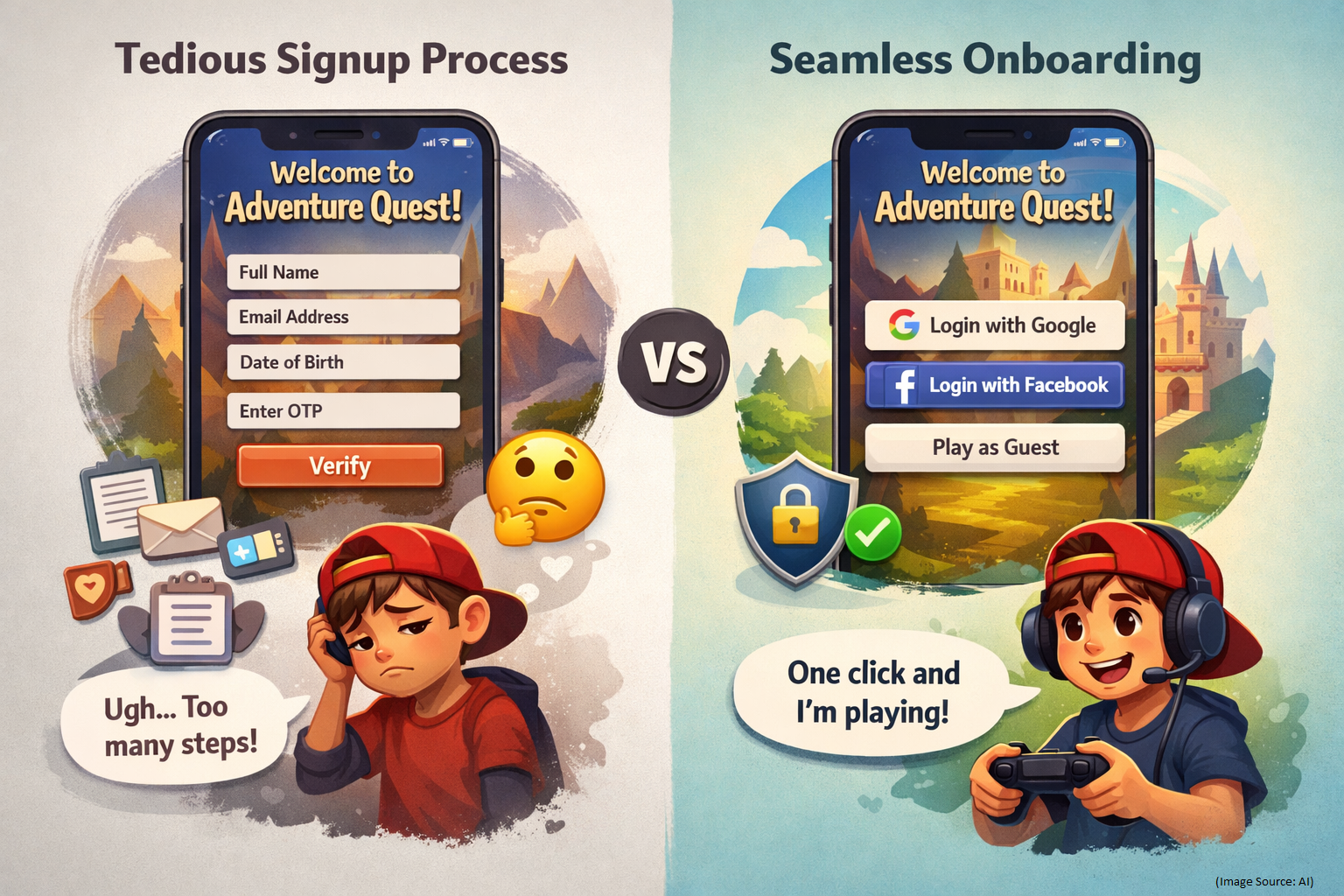
For instance, you download a game to play and instead of easily getting started with the game experience, you have to fill in details like name, email, birthdate, OTP and more, so you get bored and quit. But instead of this long process, if the game offers “Google/Facebook login” or “play as a guest”, you can easily enjoy the game, eliminating annoying steps.
Intelligent SaaS Dashboard Design
Display, track and analyze key performance metrics in real-time, allowing users to find out the basic overview of the profile through the dashboard and learn more about activities by diving deep into the navigation bar. A clean and uncluttered display interface helps users to navigate through the dashboard without any challenges and experience the optimized user journey of your SaaS digital product.
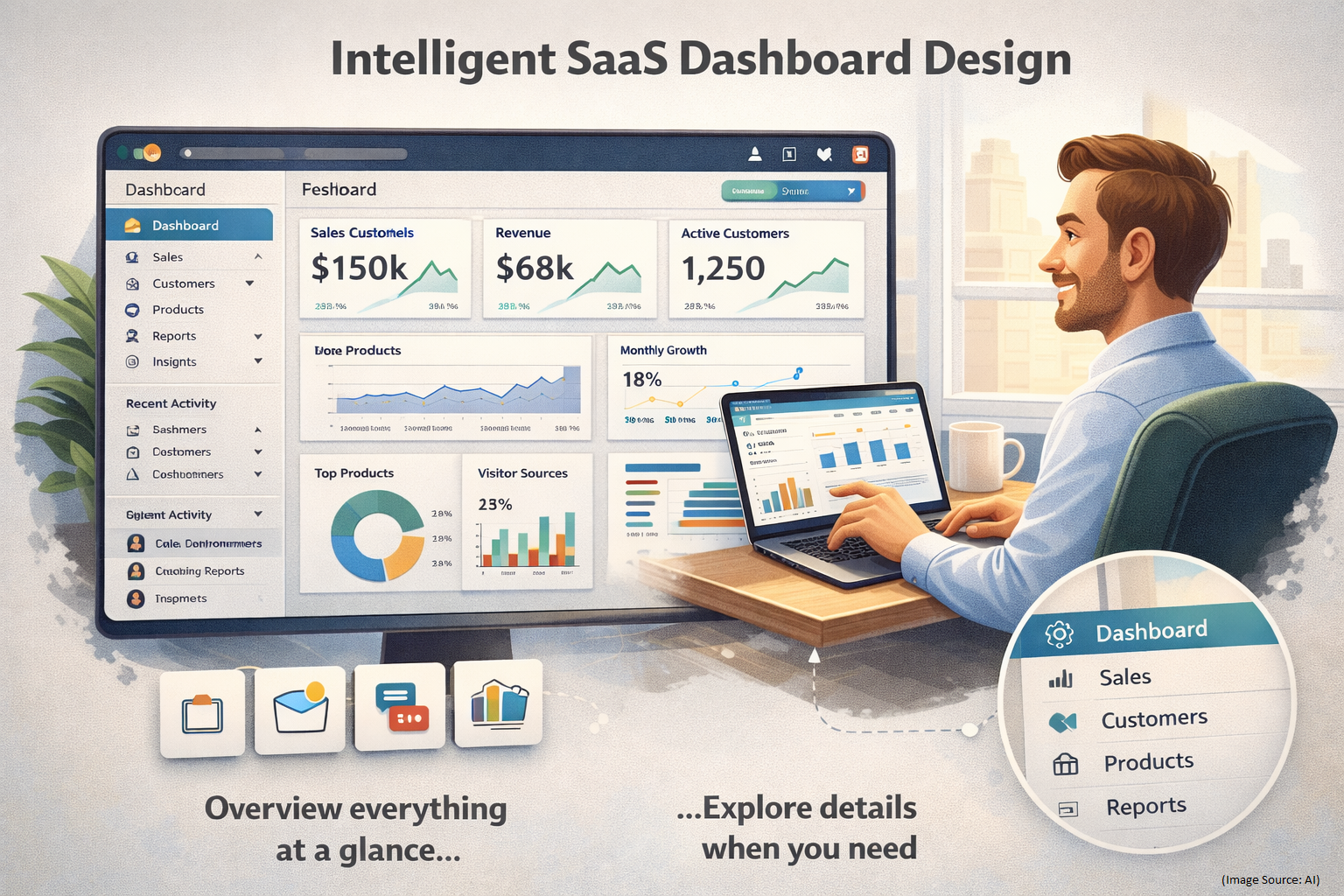
For example, imagine a business owner who wants to check sales, revenue, customer activities and more can check an overview of everything at the dashboard and get detailed insights later by navigating the control menu.
Frictionless SaaS User Journey Optimization
Building unique features and functionalities for your SaaS product alone can not help you win the competition race. You must offer a seamless user experience that enables users to navigate your digital product From onboarding process and interaction to feedback and outcome. Your web application interface and user flow need to be straightforward and accessible to all. This way, businesses can attract users to boost engagement, increase retention rate and accelerate growth.
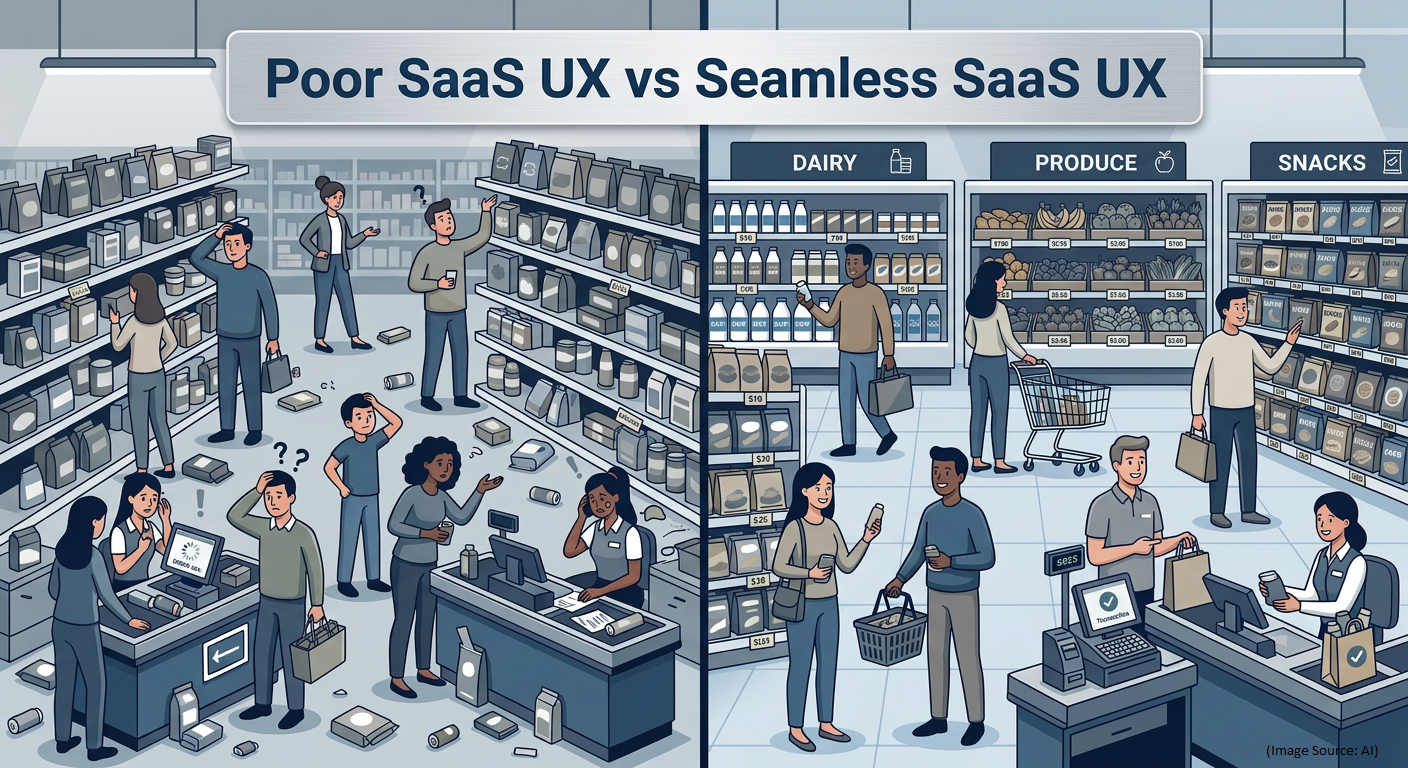
Let’s take an example of a supermarket where everything seems unorganized with no labels, sections, price tags and a confusing checkout process. You’ll be disappointed and confused, while the supermarket with a structured process and fast checkout makes your shopping experience great. The same goes with SaaS UX, where users should be able to login – interact – engage without any confusion.
Scalable SaaS Interface Design
Plan, analyze and build a modular, consistent UI system that can handle increasing features without compromising the usability of your SaaS product.
Prioritize role-based personalization, navigation and focus on improving speed & performance and intuitive data visualization to make complex systems simple. Build clear layouts and responsive interfaces with over-the-top uniqueness to make your SaaS platform scalable and stand out from the competition.
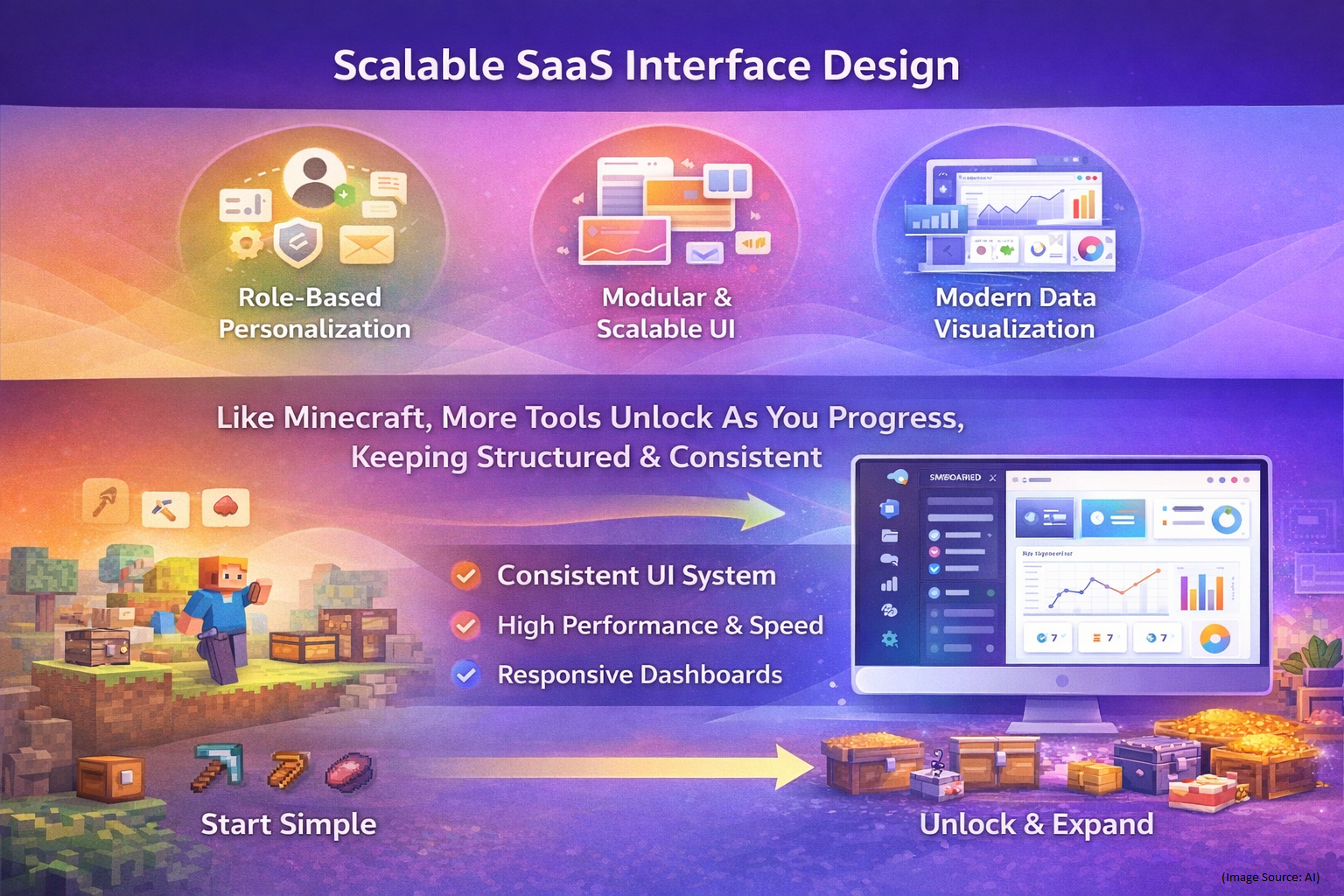
For instance, imagine playing Minecraft. Everything is simple, you just build and explore, but as you progress through the game, more tools, new items and features are unlocked. The game still feels smooth and easy, maintaining consistency and organized structure.
Performance-driven UX
Create fast, efficient and user-centric digital products that attract users, boost engagement and drive customers by understanding user behavior, user goals and analyzing user actions. Research and analyze market trends, competitors’ designs and perform A/B testing to better understand the user experience and design SaaS product interfaces accordingly to boost conversion, retention and revenue.
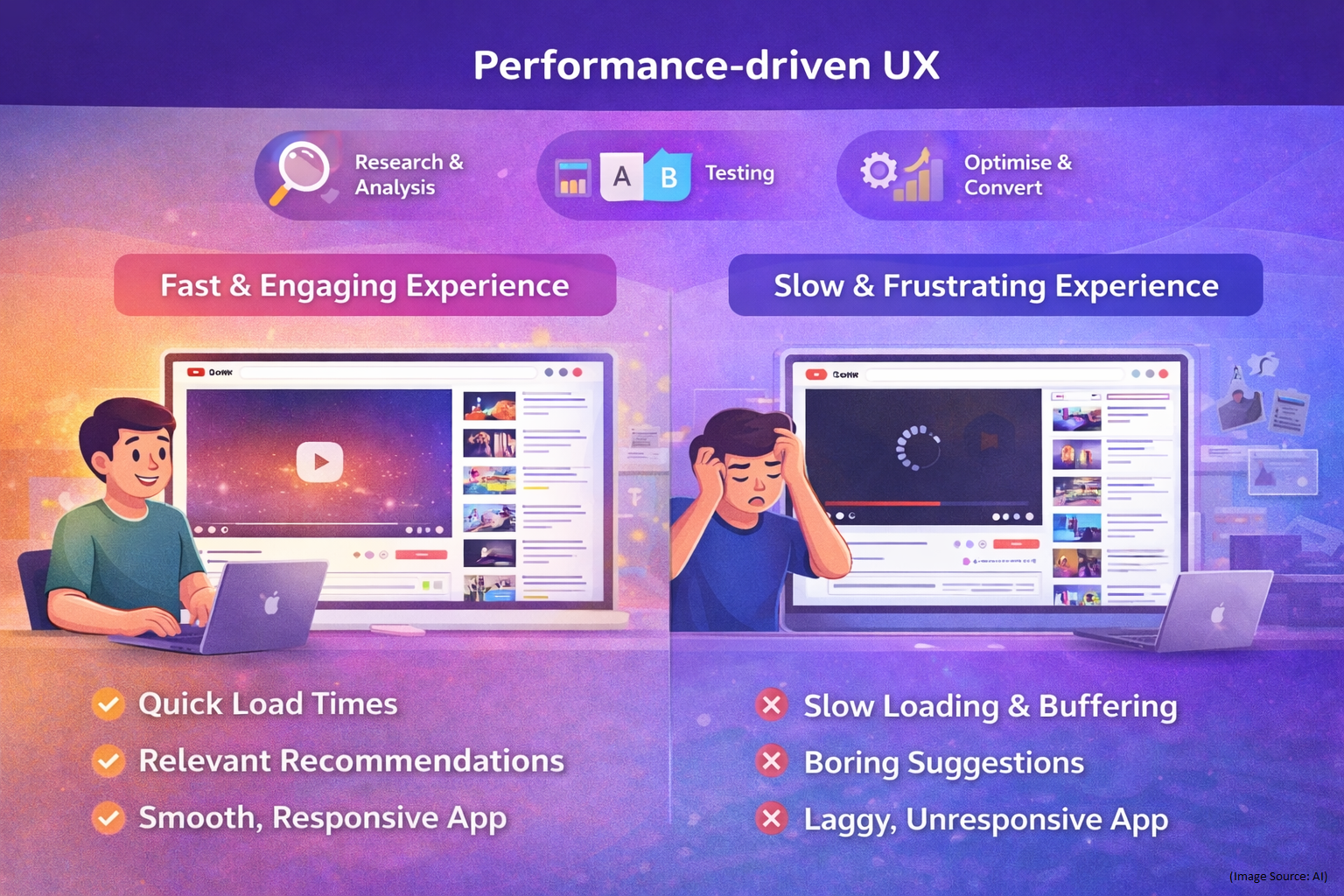
For example, imagine watching videos on YouTube, when they load quickly, give recommendations that you like and have a smooth internet connection, you enjoy watching. However, when they buffer a lot with slow app response and boring suggestions, you leave quickly.
SaaS UX design trends to watch in 2026
AI-powered UX personalization:
User experience design evolves as time passes and interest of users align with market trends, where technologies like AI-powered hyper-personalization save the day.
Predictive Interfaces:
Static interfaces are now turning into predictive and adaptive systems that understand user needs via Artificial Intelligence and provide “Agentic UX” that completes tasks to improve user experience and boost engagement.
Voice and Conversational UI in SaaS:
SaaS experience is now moving from traditional text-based search interfaces to intelligent voice-enabled and conversational experiences with multi language support to make the SaaS product accessible to all users, boosting productivity.
Minimalist but data-rich interfaces:
Teams are following strategic minimalism where they hide aesthetics in interfaces; however, functions remain smart and data-rich to remove non-essential visual noise and prioritize actionable data.
Dark mode evolution and adaptive themes:
Once a nice-to-have feature like dark mode becomes a core usability standard, incorporating automated, and context-aware shifts with highly personalized systems that adapt user behaviour.
Micro-interactions for engagement:
Customer assistance with purposeful animations and feedback allows businesses to boost user engagement, retention and loyalty through shifting from static functional layouts to experience-led growth.
Common SaaS UX Mistakes to Avoid
Overcomplicated Dashboards
A complicated and clumsy dashboard is the most common mistake that leads to data vomit and reduces the usability of the product. To avoid this mistake, implement progressive disclosure, adopt F-pattern layout and use proper visual hierarchy with role-based views.
Ignoring Onboarding Experience:
Offer an optimized onboarding experience to users with an effective user journey with skippable steps to cut down exhausting processes and reduce churn rate with personalized and contextual UX flow.
Poor role-based UX Design:
Role-based UX design that performs poorly when different types of users with permissions access the interface, navigation and functionality to foster productivity. Make sure to enhance UX design with customization tailored to the role (admin/user) and a role-tailored walkthrough.
Lack of Feedback Loops
Without a systematic process of data collection & analysis and ignoring feedback loops, SaaS companies often create features that no one wants, wasting engineering efforts and disconnected user experiences.
Inconsistent UI Patterns
Uneven design and lack of consistency throughout your digital product can make your SaaS product unprofessional, complex & unreliable, which reduces trust among users and shrinks usability. This is why it is important to maintain UX design standards across your product and other channels.
Future of UX Design for SaaS Platforms
Hyper-personalization at scale
User experience design for SaaS in the future will involve a hyper-personalized and AI-driven environment that will proactively analyze user behavior, rearrange layout according to user needs, with the assistance of real-time data.
Zero-learning-curve-interfaces:
SaaS platforms are moving towards zero-learning-curve-interfaces, which turn complex SaaS products into intuitive, leveraging AI-personalization
Interactions with contextual adaptive workflows.
Integration of AR/VR in SaaS
SaaS UI UX design with AR/VR integration in the upcoming days will move beyond flat screen to enhanced collaboration and hyper-personalization, offering hands-free navigation, real-time spatial analytics and more.
UX as a Competitive Moat
Digital products will move from nice-to-have interface enhancements to core competitive moat to achieve experience-led growth, resulting in retention, user adoption and expansion.
Conclusion
SaaS UX design plays a vital role in accelerating the growth of your digital product. Following these best practices allows you to boost user experience for user attraction. Create robust UI design for SaaS applications, implementing the tips and tricks discussed in the blog to improve user experience and churn rate.